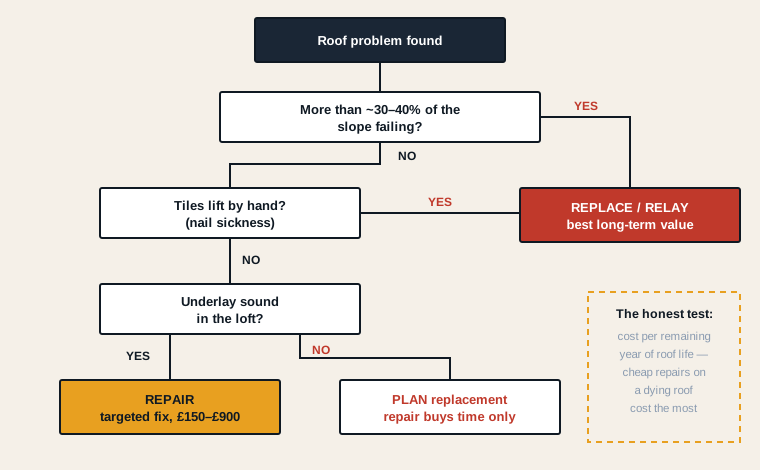
The 30% Rule
If more than roughly 30-40% of the covering on any single slope has failed — slipped tiles, cracked slates, porous concrete — repairing tile by tile is money wasted. The labour cost of repeated small repairs exceeds the cost of a single replacement within 3-5 years. Below 30%, targeted repair is almost always the right call.
The Cost-Per-Year Test
A £400 repair on a roof with 5 years of life left costs £80 per year of remaining service. A £7,000 replacement that lasts 50 years costs £140 per year. The repair looks cheaper — but if you need another £400 repair next year, and another the year after, the replacement was cheaper from day one. We present both options honestly so you can decide.
When Repair Is the Right Answer
Localised damage — a few slipped tiles after a storm, a single cracked flashing, a blocked valley. The surrounding covering is sound, the felt or membrane underneath is intact, and the timbers show no sign of rot or movement. Most routine repairs in West London fall into this category. Cost: £150-£900.
When Replacement Is the Right Answer
Widespread failure across the slope. Nail sickness (tiles lift by hand — the galvanised fixings have corroded). Felt or membrane visible through gaps or torn. Timbers sagging or soft to probe. On 1930s Metroland stock across Ruislip, Kenton, Greenford and Wembley, nail sickness is the decisive factor — once the nails go, every tile is at risk regardless of its surface condition.
When Neither — Just Monitor
Some findings look alarming but are not urgent. Surface moss on north-facing pitches. Hairline mortar cracks on a chimney stack. A single ridge tile slightly lifted. These need watching and may need attention within 12-24 months, but immediate action is not required. We tell you when monitoring is the honest answer, not when work is needed.
What a Professional Inspection Tells You
A roof inspection (£120-£250, fee credited against any work booked) gives you: the percentage of covering that has failed, the condition of fixings (nail sickness test), underlay/membrane condition (loft space inspection), timber condition (probe test for rot), and a written recommendation with realistic costs for both repair and replacement. This is the information you need to make the decision — not a sales pitch for either option.
RICS guidance on building condition assessment recommends evaluating roof condition as a percentage of covering failure, fixings integrity and underlay condition — not just visible surface appearance. A roof can look acceptable from ground level while being 6-12 months from significant failure.
Source: RICS building condition guidance